

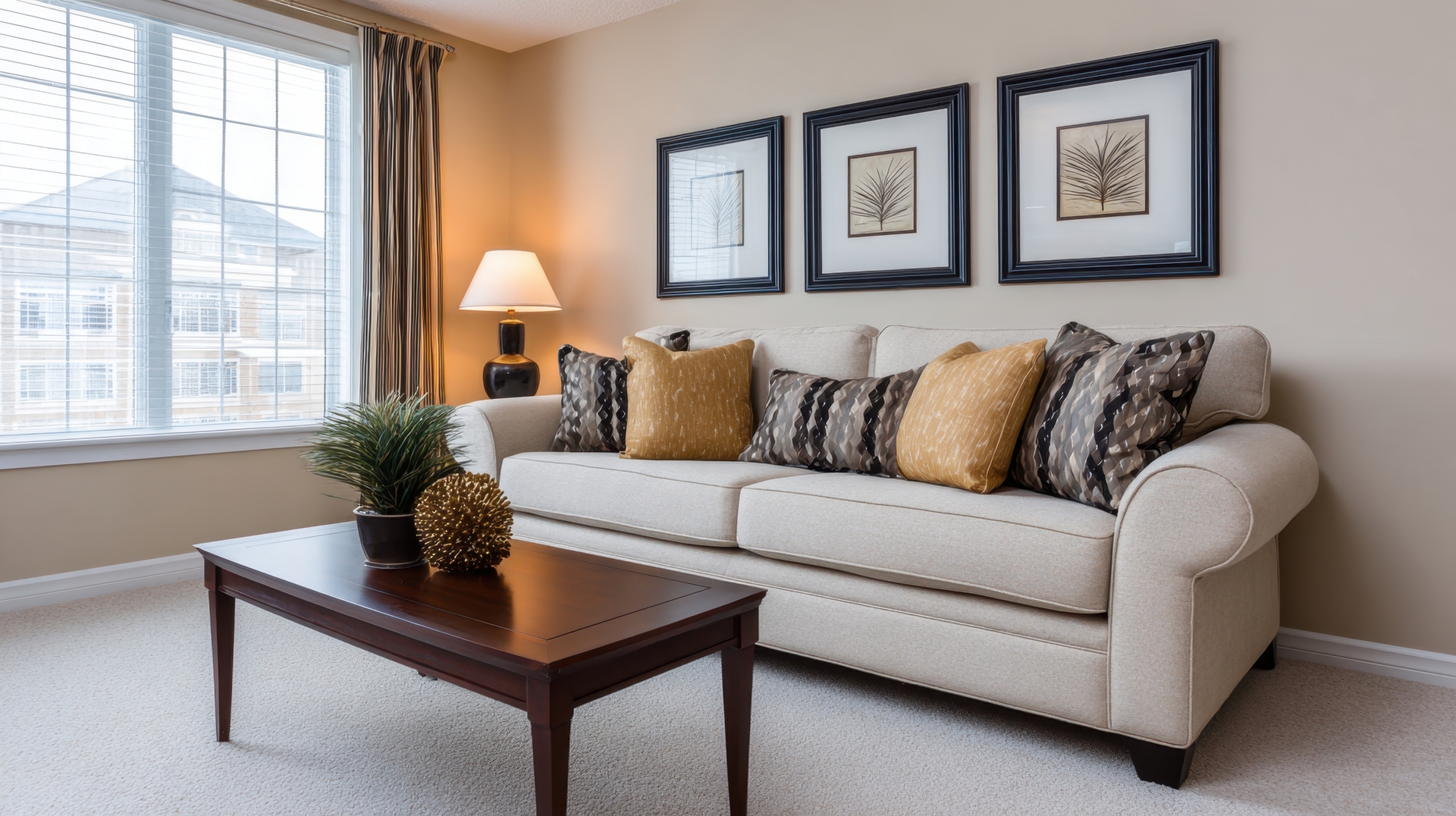
There was a time when pulling up carpet was considered a renovation milestone. Homeowners were in a rush to get to the hardwood underneath, and "wall-to-wall" became shorthand for outdated. That era is fading fast. Across design circles, carpet is making a confident return to the living room, and it is not showing up apologetically.
If you have been on the fence about bringing carpet back into your main living space, you are in good company with some of the most forward-thinking designers working today. Here is what is driving the shift and how people are pulling it off beautifully.
Why designers fell back in love with carpet
Hard flooring dominated the design conversation for well over a decade. It photographed well, felt contemporary, and had a clean, minimal appeal that matched the mood of the times. But interiors have shifted. People want warmth. They want rooms that feel lived in and layered, spaces that actually invite you to sit down and stay awhile.
Carpet delivers that in a way no other flooring material can. It absorbs sound, softens a room visually, and underfoot, there is simply nothing like it. Designers who once avoided it are now specifying it deliberately, not as a fallback, but as a first choice.
The "grounded" living room trend
One of the biggest shifts happening right now is the move away from floating furniture arrangements. Designers are "grounding" seating areas with a carpet that anchors the sofa, chairs, and coffee table into a cohesive zone. Instead of a small accent rug placed under the front legs of a sofa, the carpet runs the full length of the conversation area.
This approach works especially well in open-concept homes, where the living room needs a visual boundary without a wall to define it. A well-chosen carpet does that effortlessly, creating a room within a room.
Texture is the new neutral
Color trends in carpet have matured considerably. The patterns and shags of decades past have given way to something far more sophisticated: texture. Designers are leaning into loop pile, cut-and-loop combinations, and dense friezes in tone-on-tone colorways. Think warm creams layered over natural underpads, rich charcoals with a subtle fleck, or earthy taupes that read almost like natural fiber.
These options live quietly in the background of a room, letting furniture and art take center stage while still contributing enormous tactile richness. When you run your hand across a well-made textured carpet, you understand immediately why it belongs.
How durability changed the conversation
A lot of the old resistance to living room carpet came down to practicality. Spills, foot traffic, pets, kids. Those were real concerns, and for many households, they still are. But carpet technology has genuinely changed. Today's fiber treatments and construction methods have produced carpets that would have seemed impossible twenty years ago.
Stain-resistant treatments have become standard across most residential lines. Fiber engineering means many carpets now release dirt rather than trapping it. When you pair the right carpet with professional flooring installation and a quality pad underneath, you are looking at a product that holds up through years of real family life without losing its look.
Layering carpet with hard flooring
Here is something that might surprise you: some of the most striking living rooms right now use both. A hardwood or luxury vinyl runs through the entry, hallway, and adjacent dining area, and then carpet takes over in the living room. The transition becomes a design feature in itself, marking the shift from movement space to gathering space.
This combination also makes practical sense. Hard flooring near doors handles mud season and wet boots without complaint. Carpet in the living room handles movie nights, early mornings, and the quiet hours when everyone finally sits still.
What North Dakota homes get right with carpet
Here in Bismarck and across the Missouri River Valley, residents understand something that warmer climates often forget: flooring is part of your home's comfort system. When temperatures drop and the wind picks up off the river, carpet acts as genuine insulation beneath your feet. It holds warmth in a way that tile or hardwood simply cannot match.
That is not just a comfort benefit; it is an energy benefit. A carpeted living room can feel noticeably warmer than one with hard flooring, even at the same thermostat setting. For a region that spends several months in serious winter, that adds up.
Choosing the right carpet for your living room
The most common mistake people make is choosing carpet based on a small sample chip under store lighting. The right way to do it is to bring larger samples into your actual space and see how they respond to your light at different times of day. Morning light in a north-facing living room behaves completely differently than afternoon sun streaming in from the west.
Pile height matters too. Higher piles feel luxurious but show footprints and vacuum marks. Lower and denser piles tend to wear more evenly in high-traffic areas. If your living room is also your family's main gathering space, a mid-pile option with a twist or texture hides life gracefully while still feeling plush.
Browse carpet styles and colors to get a sense of the range available before you come in, and come with an open mind. The right choice is often not the one you expected.
Ready to bring the warmth back into your living room? The flooring experts at Carpet World Bismarck are here to help you find the perfect fit for your space, your family, and your North Dakota lifestyle. Visit our 17,000-square-foot showroom in Bismarck and explore our expansive selection of residential carpet, or schedule your free in-home estimate and let our team bring the experience to you.


